
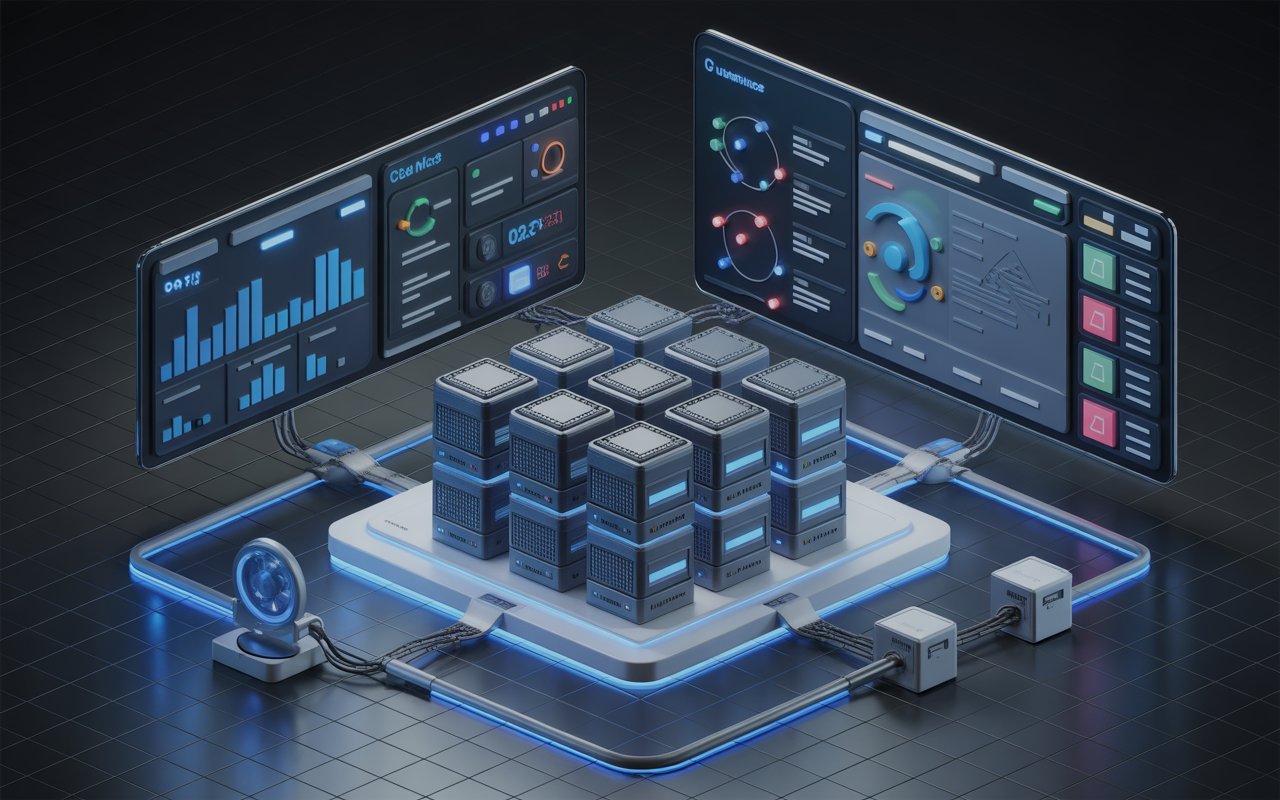
SOA OS23 is transforming modern software systems. In today’s digital world, traditional architectures struggle with growing complexity, real-time demands, and frequent updates. It, or Service-Oriented Architecture Operating System 2023, embeds service-oriented principles at the OS level, enabling modular, cloud-native, and microservices-driven infrastructures. It provides unmatched flexibility, scalability, and security, making it ideal for modern enterprises.
Understanding SOA OS23
It stands for Service-Oriented Architecture Operating System 2023. It is a modern framework that structures operating system functionalities as independent services rather than tightly coupled components.
Unlike traditional operating systems, which rely on monolithic architectures, it breaks down core functions—such as authentication, file management, and networking—into standalone services. Each service communicates through standardized APIs, enabling greater modularity and adaptability.
By applying SOA principles at the operating system level, SOA OS23 enables independent service management, scalability, and updates. This approach minimizes system dependencies and enhances resilience. Background and Evolution
Service-Oriented Architecture originated in the early 2000s as a method to allow different applications to communicate using standardized services. Initially, SOA focused mainly on enterprise applications.
Over time, monolithic systems proved inefficient due to:
- Slow deployment cycles
- High maintenance costs
- Limited scalability
This led to the rise of microservices-based systems, where applications are split into smaller, independent components.
It was developed to bring these modern architectural concepts directly into the operating system layer, creating a foundation optimized for distributed and cloud-based environments.
Core Architecture of SOA OS23
Modular Design
It is built on a modular architecture. Each system function operates as an independent service, making the system loosely coupled.
Benefits of modularity include:
- Faster updates
- Improved security
- Reduced system downtime
- Easier customization
Organizations can replace or upgrade services without affecting the entire system.
Microservices Foundation
Microservices are small, self-contained services designed to perform specific tasks. it adopts this approach by structuring its core components as microservices.
Key advantages:
- Independent deployment
- Faster innovation
- Fault isolation
While SOA focuses on service communication, microservices emphasize service independence and lightweight deployment. SOA OS23 combines both models for optimal efficiency.
API-Driven Communication
APIs form the backbone of it. All services communicate through secure, standardized APIs.
Supported formats and protocols include:
- REST
- JSON
- XML
- gRPC
This ensures smooth integration with internal systems and third-party platforms while maintaining secure data exchange.
Containerization Support
It fully supports container technology, allowing services to run in isolated environments.
Benefits include:
- Faster deployment
- Better resource efficiency
- Improved security
- Easy scalability
The platform integrates seamlessly with orchestration tools such as Kubernetes for service management.
Key Features of SOA OS23
Scalability
It supports:
- Horizontal scaling (adding more instances)
- Vertical scaling (increasing resources)
- Load balancing
- Auto-scaling
This ensures optimal performance during traffic spikes.
Dynamic Resource Management
The system intelligently allocates:
- CPU
- Memory
- Network bandwidth
Resources are distributed in real-time based on workload demands, improving efficiency.
Fault Tolerance & Resilience of SOA OS23
If one service fails:
- It is isolated
- The rest of the system remains unaffected
This ensures high availability and business continuity.
Security Framework
SOA OS23 includes:
- Built-in authentication
- Strong encryption
- Role-based access control
Security is embedded at every level.
Monitoring & Logging
The platform provides:
- Real-time dashboards
- Error detection
- Detailed audit logs
This helps teams proactively manage system health.
Ease of Maintenance
Services can be:
- Updated independently
- Rolled back easily
- Version-controlled
This minimizes downtime and operational risk.
How SOA OS23 Works
| Process Area | Key Activities / Functions |
| Service Deployment Process | Design individual services, Package into containers, Deploy via CI/CD pipelines, Follow structured service lifecycle |
| Orchestration & Automation | Manage service discovery, Automate scaling, Balance workloads, Ensure seamless coordination |
| Communication Flow | API requests, Secure routing, Structured responses, Enable smooth data flow |
| Real-Time Monitoring | Dashboards, Alerts, Performance metrics, Ensure system stability |
Security & Governance
Zero-Trust Architecture
Every request is:
- Verified
- Authenticated
- Logged
No user or device is trusted by default.
Service Isolation
Containers provide:
- Sandboxing
- Attack surface reduction
Encrypted Communication
All APIs use:
- SSL/TLS
- Token-based authentication
Compliance & Auditing
SOA OS23 maintains:
- Detailed logs
- Compliance reporting
- Regulatory tracking
Real-World Applications
| Application Area | Key Uses / Functions |
| Enterprise IT Systems | Department-level services, Legacy integration |
| Internet of Things (IoT) | Device monitoring, Remote updates |
| Edge Computing | Low-latency processing, Local data handling |
| Smart Manufacturing | Industry 4.0 automation, Real-time analytics |
| Fintech | KYC verification, Fraud detection, Payment gateways |
| Healthcare | Patient record systems, Secure HL7 data exchange |
Implementation Strategy of SOA OS23
Implementing it successfully requires a structured and strategic approach. Organizations must ensure their systems, teams, and objectives are aligned before deployment.
System Assessment
Before migrating to it, organizations should conduct a comprehensive architecture audit. This involves evaluating existing systems, identifying performance bottlenecks, and mapping out dependencies.
Key steps include:
- Reviewing current infrastructure
- Identifying outdated components
- Mapping service dependencies
- Assessing security vulnerabilities
Identifying integration points is crucial for seamless connectivity between legacy systems and new service-based components. This step helps avoid disruptions during migration and ensures data flows remain uninterrupted.
Team Training
SOA OS23 introduces modern architectural practices, making skill development essential. Teams must be trained in:
- Microservices architecture
- API development
- Container management
- Cloud-native tools
Adopting DevOps practices improves collaboration between development and operations teams. CI/CD pipelines, automation tools, and infrastructure-as-code techniques help streamline deployments and improve system reliability.
Goal Setting
Clear goals guide the implementation process. Organizations should define:
- Key Performance Indicators (KPIs) such as uptime, latency, and response times
- Performance benchmarks to measure system improvements
Setting measurable targets helps track success and ensures the implementation aligns with business objectives.
Documentation
Thorough documentation ensures long-term system maintainability. This includes:
- Detailed system diagrams
- API specifications
- Configuration records
- Deployment procedures
Proper documentation simplifies troubleshooting, onboarding new team members, and auditing system changes.
Stakeholder Collaboration
Successful adoption requires cross-team coordination between IT, security, management, and business units. Regular meetings, progress reviews, and shared dashboards encourage transparency.
Feedback loops allow teams to identify issues early and continuously improve system performance and usability.
Advantages of SOA OS23
It offers multiple benefits that make it ideal for modern enterprises.
High Scalability
Services can scale independently, ensuring performance remains stable even during traffic surges.
Better System Stability
Service isolation prevents system-wide failures, improving overall reliability.
Improved Security
Built-in authentication, encryption, and access control policies enhance data protection.
Faster Deployment
Independent service updates enable rapid feature releases without downtime.
Cost Efficiency
Optimized resource usage and reduced maintenance efforts lower operational costs.
Challenges & Limitations
While powerful, SOA OS23 also presents challenges.
Initial Setup Complexity
Migration from legacy systems can be time-consuming and resource-intensive.
Skill Requirements
Teams need advanced expertise in cloud-native technologies and DevOps practices.
Service Management Overhead
Managing multiple services increases operational complexity.
Monitoring Challenges
Tracking distributed systems requires advanced observability tools.
Despite these challenges, proper planning significantly reduces risks.
Comparison with Traditional System
| Feature | Monolithic OS | SOA OS23 |
| Architecture | Single system | Service-based |
| Scalability | Limited | High |
| Deployment | System-wide | Per service |
| Failure Impact | System crash | Isolated |
Performance Comparison
SOA OS23 offers better load handling and responsiveness due to distributed services.
Security Comparison
Zero-trust security in it outperforms traditional perimeter-based models.
Maintenance Effort
Independent updates reduce downtime and operational complexity.
Best Practices
Service Design Principles
- Keep services small
- Follow the single-responsibility rule
- Design for failure
API Versioning
- Use semantic versioning
- Maintain backward compatibility
- Document changes clearly
Monitoring Strategies
- Implement centralized logging
- Use real-time dashboards
- Set automated alerts
Security Guidelines
- Enforce zero-trust policies
- Use strong encryption
- Regular security audits
Future of SOA OS23
Its future looks highly promising, driven by continuous technological advancements and community collaboration. AI integration will enable automated performance optimization, predictive maintenance to prevent failures, and intelligent monitoring, making systems more self-healing and efficient. Enhanced interoperability will improve support for legacy systems and enable seamless cross-platform integration, ensuring smoother digital transformation across industries.
Additionally, as an open-source platform, SOA OS23 will continue to benefit from global developer contributions, rapid innovation, and community-driven enhancements, keeping the framework robust, up-to-date, and highly adaptable for future enterprise needs.
Conclusion
It stands as a next-generation architectural framework that empowers organizations to build resilient, scalable, and secure systems. Its service-based model enhances flexibility, accelerates deployment, and reduces operational costs.
By adopting it, businesses gain a strong foundation for digital transformation, enabling seamless integration of emerging technologies such as AI, IoT, and edge computing.
While implementation requires careful planning and skilled teams, the long-term benefits far outweigh the challenges. SOA OS23 is not just a technical upgrade—it is a strategic move toward a smarter, more agile digital future.
For organizations aiming to stay competitive in today’s fast-paced technology landscape, adopting it is a forward-thinking decision that unlocks innovation and operational excellence.