
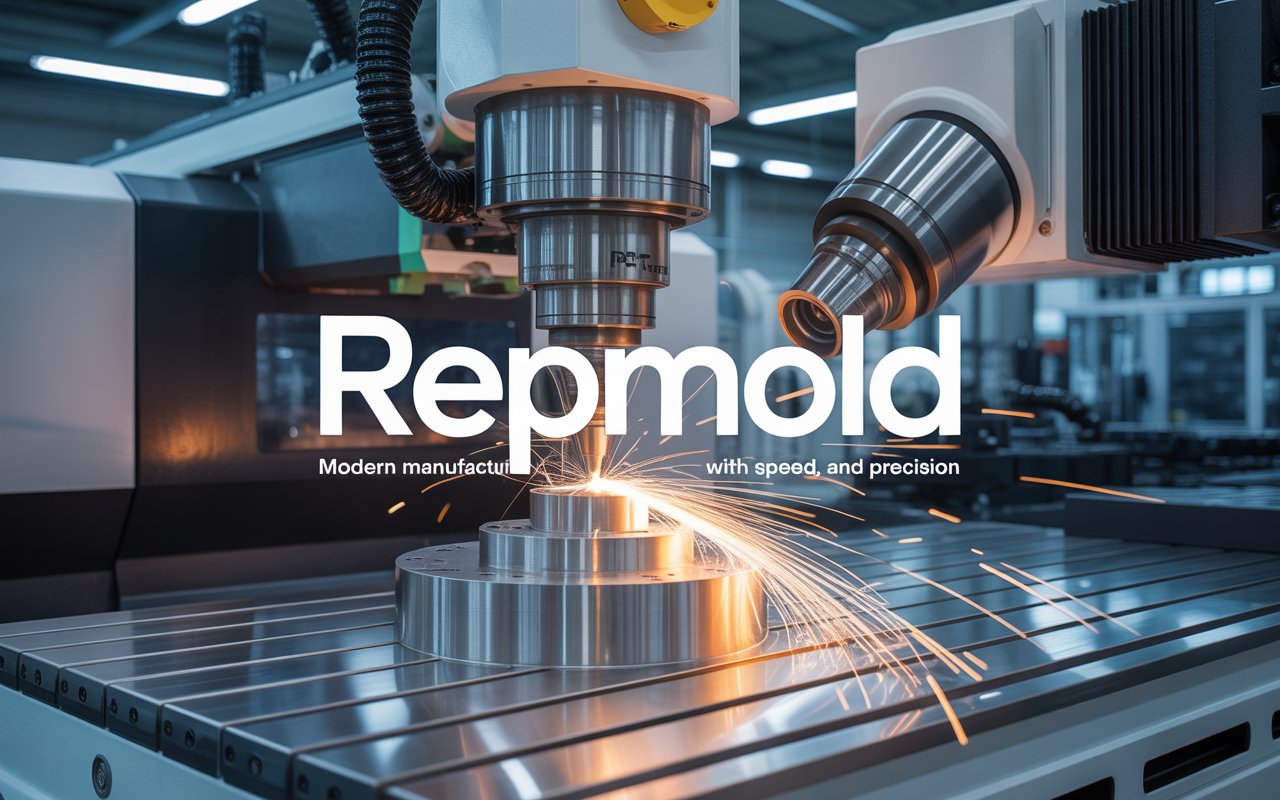
Repmold is transforming modern manufacturing. In today’s fast-paced world, manufacturers are under constant pressure to produce high-quality products faster, cheaper, and with less waste. Traditional mold-making methods, while reliable, are often slow, labor-intensive, and expensive. It is a groundbreaking technology that reshapes how molds are designed, tested, and produced across industries.
From automotive and aerospace to medical devices and consumer electronics, it combines digital design, 3D printing, and advanced materials to accelerate production while maintaining precision and sustainability. It’s more than just a manufacturing tool—it’s a revolution for modern industry
What Is Repmold?
It is short for Replication Molding, a next-generation manufacturing technique that merges digital design, 3D printing, and molding processes to produce accurate, high-quality parts quickly.
Unlike traditional molds, which can take weeks or months to fabricate, Repmold allows manufacturers to create prototypes and final parts in just days. The process is highly adaptable, enabling the production of complex geometries that were once impossible or too costly to achieve. Industries such as automotive, aerospace, medical, and consumer goods now rely on it for faster product development, reduced costs, and improved efficiency.
History and Evolution
Traditional mold-making was a painstaking process: skilled technicians manually crafted molds from steel or aluminum, followed by testing and refinement. This method was expensive, slow, and prone to inconsistencies.
The digital revolution brought CAD software and 3D printing, which transformed mold production. Engineers could now design precise models digitally, print master prototypes, and create molds in days rather than months. Modern systems combine these innovations with advanced resins, silicone, and composites, enabling faster, more accurate, and reusable molds across industries worldwide.
How Repmold Works
Step-by-Step Process
- Digital Design: Using CAD software or 3D scanning, a precise model of the part is created.
- Master Model Creation: A 3D printer produces the first physical version of the part.
- Mold Formation: The master model is covered with resin, silicone, or composite material to form the mold.
- Replication: The mold is filled with the final material to produce the part.
- Finishing: The part is cleaned, polished, and tested for quality before use.
Supporting Digital Tools
- 3D CAD Software – for designing digital models.
- 3D Printers – to create the master model.
- Scanners – for replicating existing objects.
- Simulation Software – to test material flow and mold performance.
- Automation Tools – for precise control of temperature, timing, and curing.
Key Features of Repmold
Speed
One of the most significant advantages of it is its rapid production timeline. Traditional mold-making can take weeks or even months due to manual crafting, machining, and testing processes. With Repmold, molds can be ready in 2–5 days. This is possible because the process integrates digital design, 3D printing, and automated mold creation, allowing for faster prototyping and production. Manufacturers can respond quickly to market demands, reduce delays, and accelerate product launches, making it ideal for industries where time-to-market is critical.
Cost-Effectiveness
It is far less expensive than traditional steel molds. Conventional molds require costly materials, labor-intensive machining, and lengthy production cycles. Using digital fabrication and modern resins or composites, it reduces the need for expensive metals and extensive manual labor. The result is significant savings on both initial production and ongoing manufacturing costs, making it accessible to small businesses, startups, and even educational institutions.
Accuracy of Repmold
It delivers highly detailed and precise molds, suitable for small, intricate, or complex parts that might be difficult to achieve with traditional methods. The combination of CAD modeling, 3D printing, and advanced mold materials ensures that every mold replicates the original design with near-perfect fidelity. This precision reduces errors, minimizes rework, and improves overall product quality—essential for industries like medical devices, electronics, and aerospace, where exact specifications are crucial.
Flexibility
It allows manufacturers to easily modify designs during production without starting from scratch. Unlike traditional molds, where changes often require a complete remanufacture, Repmold’s digital workflow enables adjustments in the CAD model and rapid reproduction of updated molds. This flexibility supports iterative prototyping, rapid testing, and customization, helping businesses adapt to changing requirements or customer feedback efficiently.
Material Compatibility
It is compatible with a wide range of materials, including:
- Silicone: Ideal for flexible molds and fine detail.
- Epoxy Resin: Strong, stable, and precise.
- Polyurethane: Quick-setting for short runs.
- Composites: Lightweight and heat-resistant for specialized applications.
- Metal-Filled Resins: Combine durability with a smooth surface finish.
This versatility allows Repmold to serve industries from automotive to consumer electronics, supporting a variety of applications without being limited to a single material type.
Advantages of Using
- Efficiency & Faster Production: Shortens the time from design to finished product.
- Lower Costs: Minimizes labor and material waste.
- High Precision & Quality: Reduces defects and ensures consistent output.
- Sustainability: Eco-friendly processes save materials and energy.
- Accessibility: Small businesses, startups, and individual designers can afford high-quality molds.
- Innovation: Rapid prototyping encourages experimentation and new product development.
Applications of Repmold
It has broad applications across various industries:
| Industry | Applications |
| Automotive | Engine parts, dashboards, interior components |
| Aerospace | Lightweight, high-precision parts for planes and spacecraft |
| Medical | Dental molds, prosthetics, surgical tools |
| Consumer Electronics | Custom device casings, connectors, housings |
| Consumer Products & Fashion | Packaging, toys, small-scale product testing |
| Education & Research | Teaching digital manufacturing and prototyping |
Challenges and Limitations of Repmold
While Repmold is transformative, it comes with some challenges:
- Initial Investment: Equipment and training can be costly.
- Material Compatibility: Not all materials are suitable for 3D printing or molding.
- Learning Curve: Designers and technicians must learn CAD, 3D printing, and mold-making skills.
- Large Molds: Production of very large molds can still be expensive.
- Surface Finish: Premium parts may require additional polishing.
Case Studies / Examples
- Automotive Manufacturer: Reduced mold production time by 50% and costs by 35%.
- Aerospace Company: Produced complex molds with significantly less material waste.
- Medical Device Startup: Developed multiple prototypes in a single month, meeting strict regulatory standards.
- Electronics Firm: Reduced lead times from months to weeks, enabling faster product launches.
Repmold and Sustainability
It promotes green manufacturing practices:
- Uses fewer materials and energy.
- Molds are reusable and recyclable.
- Supports local production to reduce shipping and carbon footprint.
- Aligns with eco-conscious business models and regulatory standards.
Getting Started with Repmold
Steps for Beginners and Small Businesses:
- Plan the part or product.
- Create a digital 3D model or scan an existing object.
- Print a master model using a 3D printer.
- Form the mold with resin, silicone, or composite.
- Fill the mold with the final material.
- Cure, clean, finish, and test the part.
Even small teams can start with minimal equipment and scale up as needed.
Education & Training
Repmold is now integrated into schools, universities, and professional workshops:
- Students design, print, and mold parts in a hands-on environment.
- Encourages creativity, problem-solving, and technical skills.
- Prepares the next generation for digital and sustainable manufacturing.
The Future Vision
Repmold is set to become even smarter and more efficient:
- AI-Powered Design: Automated mold optimization and error reduction.
- Smart Sensors: Monitor temperature, pressure, and curing in real time.
- Bio-Based Resins: Eco-friendly, sustainable materials.
- Hybrid Manufacturing: Combining 3D printing and molding for faster cycles.
- IoT & Cloud Collaboration: Teams can design, monitor, and optimize molds remotely.
- Fully Automated Production: Robots handling entire processes for faster, scalable manufacturing.
These innovations position it as a key technology for future smart factories and mass customization.
Conclusion
It is more than just a mold-making tool—it’s a revolution in modern manufacturing. By combining speed, precision, flexibility, and sustainability, it empowers businesses of all sizes to innovate and compete in a fast-moving market.
With continuous advancements in AI, smart sensors, hybrid manufacturing, and eco-friendly materials, Repmold is set to lead the way into the future of efficient, responsible, and scalable production.
For companies, students, and innovators alike, embracing it means embracing the next generation of manufacturing: smarter, faster, and greener.