
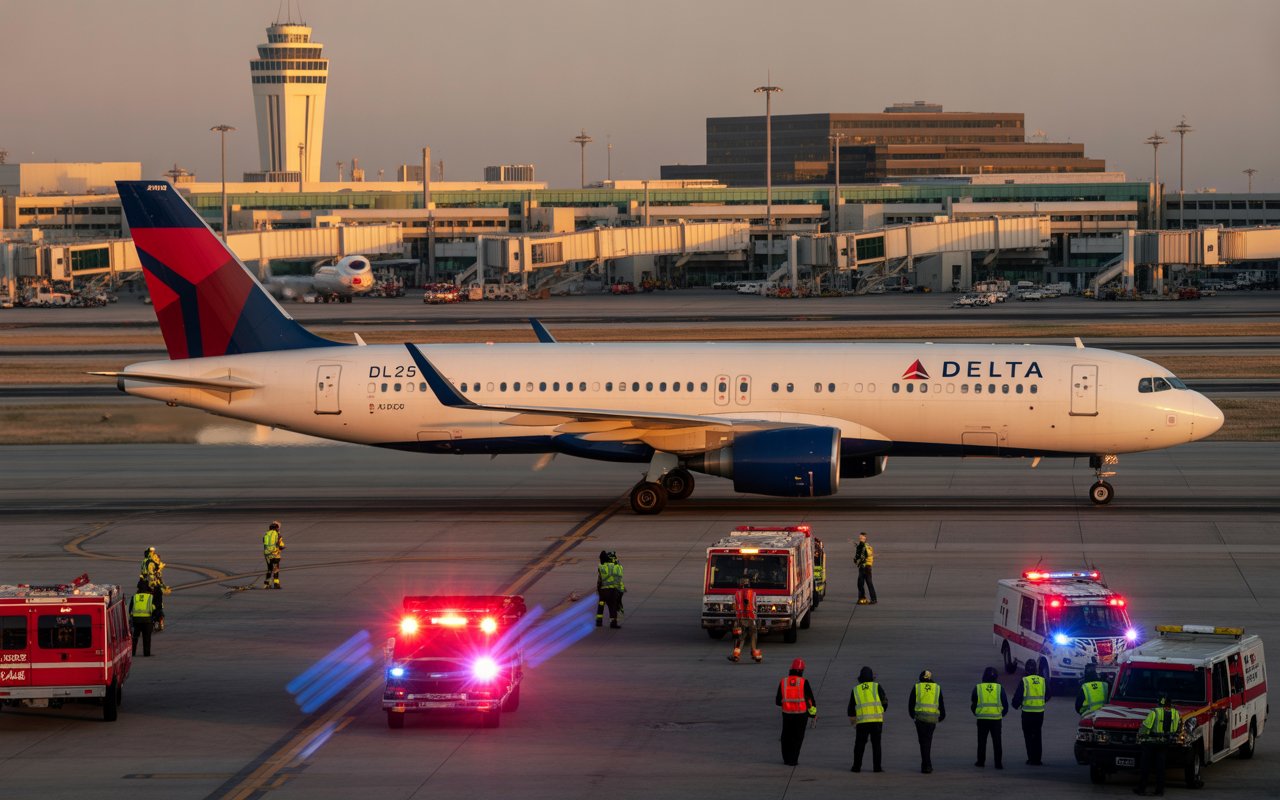
Delta Flight DL275 diverted LAX on May 26, 2025, when a routine transpacific journey from Detroit Metropolitan Wayne County Airport (DTW) to Tokyo Haneda Airport (HND) took an unexpected turn. Instead of continuing to Tokyo, the Airbus A350-900 landed safely at Los Angeles International Airport (LAX), drawing widespread public attention. Social media buzzed with passenger accounts and reactions, while aviation enthusiasts analyzed the unusual flight path.
Although the diversion appeared dramatic on live flight-tracking maps, the decision to land at LAX was guided by strict aviation safety protocols. This article explores why Delta Flight DL275 diverted to LAX, detailing the circumstances behind the diversion, passenger experiences, and the broader implications for airline operations.
Flight Overview
Delta Flight DL275 Diverted LAX is a critical component of Delta Air Lines’ transpacific network, connecting the U.S. Midwest with Japan’s capital region. This route serves both business and leisure travelers, operating daily and offering a direct connection between Detroit and Tokyo Haneda.
- Flight designation: Delta Flight DL275
- Route: Detroit (DTW) → Tokyo Haneda (HND)
- Aircraft type: Airbus A350-900
- Date of diversion: May 26, 2025
The flight typically operates using the Airbus A350-900, an aircraft designed for ultra-long-haul operations with advanced safety systems, fuel efficiency, and high levels of passenger comfort. Its regular operation on this route underscores its importance in Delta’s network and highlights the need for reliability on transpacific journeys.
Aircraft and Technology on Delta Flight DL275 Diverted LAX
The Airbus A350-900 is among the most advanced long-haul aircraft in commercial aviation. Designed to handle intercontinental flights with efficiency and safety, the aircraft boasts:
- Fuel-efficient engines capable of ultra-long-range flights.
- Advanced monitoring systems that track the performance of critical components in real-time.
- Redundant systems ensure that essential functions, such as navigation and environmental controls, remain operational even if one system fails.
- Passenger comfort features include quiet cabins, larger windows, and improved air circulation.
In the case of DL275, the aircraft’s technology played a crucial role in detecting a mid-flight issue with the engine anti-ice system, enabling the crew to take precautionary measures before the situation escalated.
Timeline of Events of Delta Flight DL275 Diverted LAX
Departure from Detroit
DL275 departed Detroit later than scheduled due to a delay in the aircraft’s arrival from a previous international flight. While the departure delay caused minor inconvenience, it was unrelated to the later technical issue that prompted the diversion. At takeoff, the aircraft was cleared for normal operations, and all systems were operating within standard parameters.
Mid-Flight Issue
Several hours into the flight, while cruising over the North Pacific near the Bering Sea, the flight crew detected an irregularity in the engine anti-ice system.
The anti-ice system is critical in high-altitude, cold environments. It prevents ice from forming on the engine inlets, wings, and sensors. Ice accumulation can interfere with engine airflow, reduce aerodynamic efficiency, and compromise instrument accuracy. Even a minor malfunction requires immediate attention, especially over remote oceanic regions where diversion options are limited.
Delta Flight DL275 Diverted LAX Decision
Given the circumstances, the crew decided to divert the flight south to Los Angeles International Airport instead of continuing to Tokyo or landing at a closer Alaskan airport. Factors influencing this decision included:
- Safety: Ensuring the aircraft and passengers could land safely.
- Aircraft capability: Assessing whether the A350-900 could safely continue long-haul operations with a malfunctioning anti-ice system.
- Maintenance support: Selecting an airport with certified technicians, specialized tools, and access to replacement parts.
- Passenger care: Prioritizing facilities for accommodation, meals, and onward travel arrangements.
The flight duration following the diversion was approximately 12 hours and 15 minutes, nearly equal to the length of a typical Detroit-to-Tokyo flight. Passengers were understandably surprised by the extended journey, which ended safely at LAX shortly after 1:00 AM local time.
Landing at LAX
Upon arrival, passengers experienced a mix of relief and fatigue after the prolonged flight. The crew and Delta ground staff facilitated smooth disembarkation, assisting with accommodations, meals, and rebooking flights to Tokyo or alternate destinations.
Why LAX Was Chosen
While maps suggest Alaska may have been closer geographically, the decision to divert Delta Flight DL275 Diverted LAX was guided by operational and safety considerations rather than proximity alone.
Maintenance Infrastructure
LAX offers:
- Airbus-certified maintenance technicians familiar with the A350-900.
- Specialized tools and spare parts are necessary for rapid troubleshooting.
- Capability to inspect and resolve complex technical issues efficiently.
Many smaller airports in Alaska lack the infrastructure to handle widebody aircraft or conduct emergency maintenance for such advanced systems.
Hub Advantages
As a major Delta hub, LAX provides operational flexibility:
- Coordinating crew schedules within regulatory duty limits.
- Managing passenger rebooking on multiple flights simultaneously.
- Ensuring the aircraft can be repaired and returned to service quickly.
Passenger Care in Delta Flight DL275 Diverted LAX
LAX allows airlines to deliver comprehensive passenger support:
- Hotels and meal accommodations for stranded travelers.
- Ground services to assist with baggage, logistics, and onward connections.
- Reduced overall disruption compared to smaller diversion airports.
Anti-Ice System Malfunction Explained
Aircraft anti-ice systems are designed to prevent ice from forming on critical surfaces. Ice accumulation can:
- Affect aerodynamic performance.
- Restrict engine airflow.
- Interfere with the accuracy of flight instruments.
Although the detected malfunction did not pose an immediate danger, aviation regulations emphasize precautionary action, especially over remote oceanic routes. Diverting early to a fully equipped airport is a conservative, standard practice in modern aviation, ensuring safety over adherence to schedule.
In the case of Delta Flight DL275 diverted LAX, this cautious approach allowed the crew to land safely, mitigate risk, and provide passengers with appropriate care.
Passenger Experience about Delta Flight DL275 Diverted LAX
For the passengers on Delta Flight DL275, the diversion was an emotionally intense experience. Many travelers boarded the flight expecting to arrive in Tokyo the following day, only to find themselves landing back in the United States after more than 12 hours in the air.
Emotional Impact
Passengers reported a mix of emotions:
- Anxiety: The sudden announcement of a technical issue mid-flight caused understandable concern.
- Frustration: Travelers expressed disappointment at the extended journey and potential disruption to connections.
- Relief: Upon landing safely at LAX, many felt gratitude for the crew’s professionalism and the successful handling of the situation.
Reaccommodation at Delta Flight DL275 Diverted LAX
Upon arrival, Delta Airlines provided comprehensive support to minimize passenger disruption:
- Hotels and lodging: Passengers who required overnight accommodation were assisted promptly.
- Meals: Food and beverages were made available during waiting periods.
- Onward flight rebooking: Travelers were rebooked on flights to Tokyo or alternative destinations to resume their journey.
Crew Communication
Throughout the diversion, the flight crew maintained clear and calm communication, providing updates on the situation and estimated arrival times. This proactive approach helped manage passenger expectations, reduce panic, and reinforce confidence in the airline’s handling of the emergency.
Emergency Declaration
The crew reportedly declared an emergency during the diversion. In aviation, emergency declarations are a precautionary measure rather than a signal of imminent danger.
Purpose of Emergency Declarations
- Priority landing: Ensures air traffic control clears the aircraft for immediate landing.
- Emergency services readiness: Ambulances, fire crews, and airport personnel are placed on standby.
- Operational efficiency: Minimizes delays and potential conflicts with other air traffic during abnormal flight conditions.
Declaring an emergency is standard practice in aviation when a technical irregularity arises, reflecting a cautious and safety-first mindset rather than panic.
Public and Media Reaction about Delta Flight DL275 Diverted LAX
The diversion of Delta Flight DL275 quickly became a topic of discussion online. Social media platforms were filled with passenger accounts, videos, and photos from the flight. Live flight tracking maps showed the unusual trajectory of the aircraft, highlighting the southbound detour to Los Angeles instead of continuing to Japan or diverting to Alaska.
Amplified Public Concern
Modern flight-tracking tools, while informative, can amplify public concern by making unusual events highly visible. Passengers and aviation enthusiasts closely followed the flight’s progress, speculating on the cause of the diversion and the safety of those on board.
Media coverage focused on both the technical aspects of the incident and the passenger experience, emphasizing Delta Airlines’ response and the aircraft’s safety features.
Long-Haul Diversions: Context and Frequency
Transpacific diversions like the one experienced by Delta Flight DL275 diverted LAX are uncommon but not unheard of. They are generally triggered by technical issues, weather events, or medical emergencies, and follow well-established aviation protocols.
Standard Protocols
- Early detection: Flight crews monitor aircraft systems and react to any alerts or irregularities.
- Prioritizing safety: Decisions to divert prioritize human life and aircraft integrity over schedule or fuel efficiency.
- Hub airport selection: Major hub airports like LAX are preferred for diversions due to maintenance capabilities, passenger support, and logistical flexibility.
Historical Examples
Similar diversions have occurred on other long-haul routes when technical issues arose over remote areas, such as the Pacific Ocean or Arctic regions. These events underscore the importance of robust emergency planning and infrastructure in aviation.
Post-Diversion Actions
Following the safe landing of Delta Flight DL275 diverted LAX, Delta Airlines implemented immediate post-diversion procedures:
- Aircraft inspection and servicing: Certified technicians conducted thorough checks of the Airbus A350-900, including the anti-ice system.
- Return to service: After maintenance and clearance, the aircraft resumed normal operations on the Detroit–Tokyo route.
- Passenger support: Travelers were accommodated, rebooked, and provided with logistical assistance.
The incident also provided Delta with operational insights, reinforcing the importance of hub airports, emergency planning, and passenger care strategies.
Key Takeaways
The diversion of Delta Flight DL275 diverted LAX illustrates several important lessons for both airlines and travelers:
- Safety over schedule: Airline crews prioritize human life and aircraft integrity over distance or timetable.
- Maintenance infrastructure is crucial: Hub airports with full maintenance capabilities allow for swift resolution of technical issues.
- Passenger support matters: Hotels, meals, and rebooking options reduce the disruption caused by diversions.
- Modern aviation protocols work: Even complex, long-haul flights can be safely diverted when systems and crews follow established safety procedures.
Conclusion
The diversion of Delta Flight DL275 Diverted LAX on May 26, 2025, serves as a clear example of aviation safety in action. The crew’s decision-making, supported by aircraft technology and Delta’s operational resources, ensured that passengers arrived safely despite an unexpected technical challenge.
While dramatic on maps and flight trackers, the incident reflects disciplined, well-supported aviation protocols designed to protect passengers and aircraft alike.
Ultimately, the DL275 diversion demonstrates the careful balance between technology, human judgment, and passenger care in modern long-haul aviation, reminding travelers that safety remains the highest priority—even when schedules are disrupted.
Disclaimer:
The information provided in this article is for informational and educational purposes only. While every effort has been made to ensure accuracy, the details regarding Delta Flight DL275 diverted LAX are based on publicly available sources and passenger accounts. Flight operations, technical assessments, and airline procedures may involve additional confidential or operational considerations not covered here. This article does not constitute official airline communication or guidance. Readers should consult Delta Air Lines or official aviation authorities for authoritative information regarding flight operations or safety protocols.