
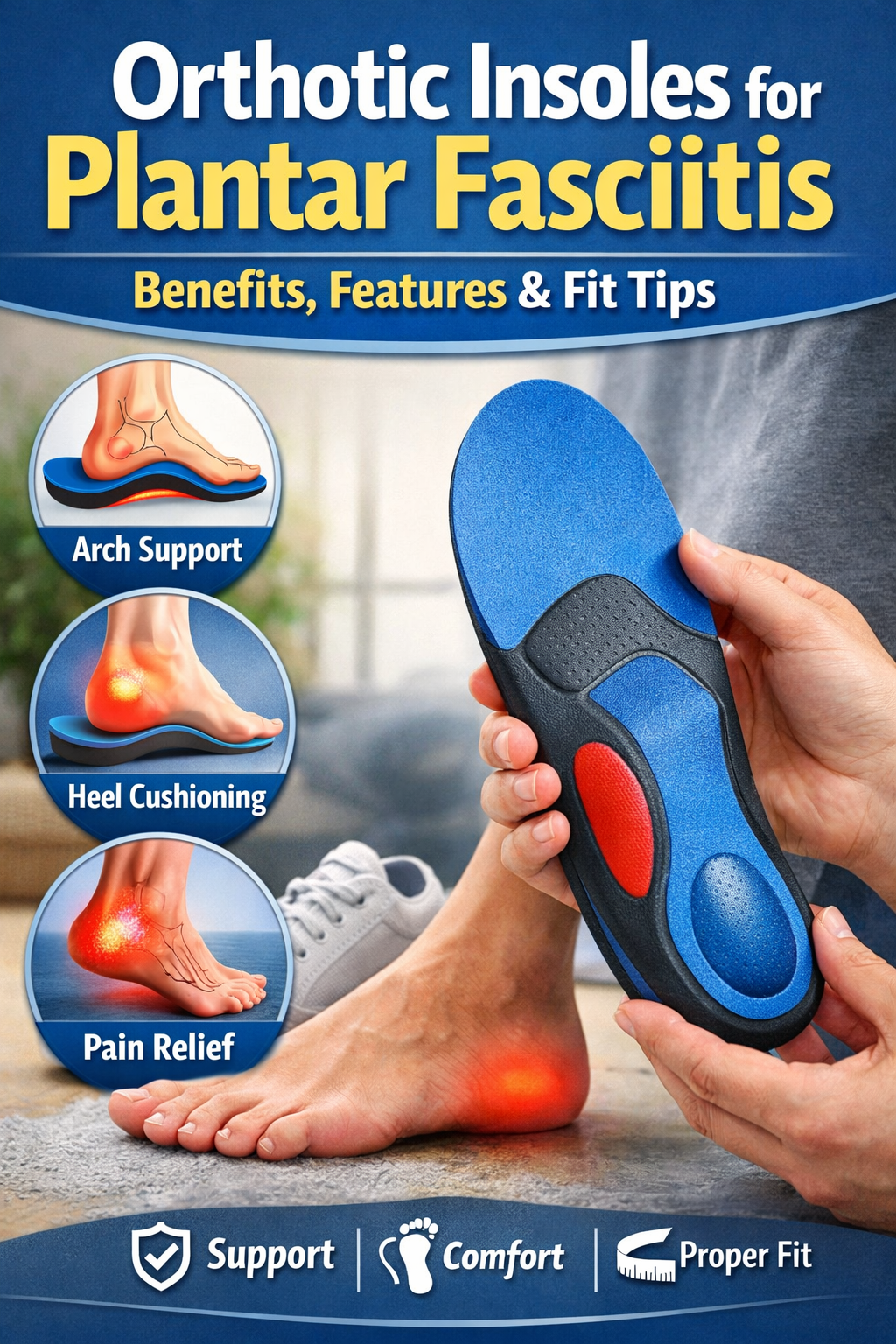
If your first steps in the morning feel like you have landed on a drawing pin, you are not imagining it. Plantar fasciitis is one of the most common causes of heel pain in adults. Clinical studies estimate it accounts for up to 10 percent of running related injuries and affects a significant number of people who stand for long hours on hard surfaces.
The plantar fascia is a thick band of connective tissue that runs from your heel bone to your toes. Its job is to support the arch and absorb shock. When repetitive stress causes micro tears at its attachment to the heel, inflammation and pain follow. That is where orthotic insoles plantar fasciitis support solutions become more than just comfort accessories. They are a practical part of evidence based conservative care.
How Orthotic Insoles Reduce Strain on the Plantar Fascia
During walking, your foot naturally rolls inward slightly to absorb impact. Excessive inward rolling, known as overpronation, increases tension on the plantar fascia. Over time, this overload contributes to irritation and degeneration of the tissue.
Orthotic insoles work through several mechanisms:
- Arch support reduces excessive flattening of the foot, limiting overstretching of the fascia
- Heel cushioning absorbs impact forces during heel strike
- Pressure redistribution spreads load across the midfoot rather than concentrating it at the heel
- Improved alignment assists the ankle and lower limb in maintaining a more neutral position
Research published in podiatric and sports medicine journals shows that prefabricated and custom orthoses can significantly reduce heel pain over a period of weeks when combined with stretching and activity modification.
Key Features Backed by Clinical Reasoning
Choosing the right insole involves more than selecting the softest option.
Structured Arch Support
A contoured arch reduces tensile load on the plantar fascia during stance. If the arch collapses under your body weight, the support is insufficient. Medium to firm density materials typically provide better long term structural benefit.
Deep Heel Cup
A well designed heel cup cradles the calcaneus and stabilises the heel fat pad. This helps improve shock absorption and reduces repetitive irritation at the fascia’s origin.
Shock Absorbing Core
High density EVA or similar materials provide controlled cushioning without compressing too quickly. Walking generates forces two to three times body weight. Proper shock absorption protects not only the heel but also the knees and hips.
Breathable and Durable Materials
Heat and moisture increase friction and skin irritation. Breathable top layers improve comfort during long work shifts or exercise sessions, particularly in Australian conditions.
Proper Fit: Why It Makes All the Difference
Even the best orthotic insoles plantar fasciitis design will fail if poorly fitted.
Follow these principles:
- Match the insole size precisely to your shoe size
- Remove existing shoe liners unless advised otherwise
- Ensure the insole lies flat without lifting at the edges
- Pair with supportive footwear featuring a firm heel counter
Highly flexible shoes reduce the effectiveness of orthotic support. Structured footwear enhances the biomechanical correction provided by the insole.
In more severe cases where inflammation is acute, temporary immobilisation with a walker ankle support may be recommended by a healthcare professional to allow tissue rest before transitioning back to normal walking.
Addressing the Whole Kinetic Chain
When heel pain alters your gait, compensatory stress can travel upward. Knees rotate differently. Hips tighten. Lower back tension increases. Supporting your body holistically improves outcomes. For example, individuals managing groin strain or lower abdominal weakness while adapting their walking pattern may benefit from a Testicular Supporter to provide additional stability during movement. Pain rarely exists in isolation. Addressing contributing factors helps prevent recurrence.
Realistic Recovery Timeline
Plantar fasciitis is typically a self limiting condition, but recovery can take several weeks to months. Conservative management often includes:
- Calf and plantar fascia stretching
- Strengthening intrinsic foot muscles
- Reducing sudden increases in activity
- Wearing supportive footwear with orthotic insoles
Clinical guidelines suggest consistent use of arch support can reduce symptoms within 6 to 12 weeks for many individuals.
Consistency is critical. Wearing orthotic support only occasionally will not provide sustained relief.
Evidence Based Support for Everyday Movement
Orthotic insoles plantar fasciitis solutions offer structured support grounded in biomechanical principles. By reducing strain, redistributing pressure, and improving alignment, they assist the body’s natural healing process. Heel pain should not dictate how far you walk or how confidently you move. With the right support and consistent care, most people experience meaningful improvement.
Bodyassist provides carefully designed support products to help you manage pain, restore comfort, and return to activity safely. Giving your feet proper structural support is a small change that can deliver substantial long term benefit.
FAQs
Do orthotic insoles permanently fix plantar fasciitis?
Ans. They do not permanently change tissue structure, but they reduce strain and support healing when used consistently.
How long should I wear orthotic insoles each day?
Ans. During most weight bearing activities, especially work or exercise, for optimal benefit.
Can orthotic insoles prevent recurrence?
Ans. Yes, by maintaining arch support and reducing overload, they may lower the risk of flare ups.
Are custom orthotics better than prefabricated ones?
Ans. Both can be effective. Many prefabricated orthoses provide significant relief when properly fitted.
When should I seek medical advice?
Ans. If heel pain persists beyond several weeks, worsens, or interferes significantly with daily activity, consult a healthcare professional for assessment.
Disclaimer
The information provided in this article, “Orthotic Insoles for Plantar Fasciitis: Benefits, Features and Fit Tips,” is intended for general educational and informational purposes only and is not a substitute for professional medical advice, diagnosis, or treatment. While the content is based on current clinical understanding and biomechanical principles, individual conditions vary and may require personalised care.
Always seek the guidance of a qualified healthcare professional such as a podiatrist, physiotherapist, or medical practitioner before starting any new treatment, using orthotic devices, modifying physical activity, or managing ongoing heel pain. Do not disregard professional medical advice or delay seeking it because of something you have read in this article.